Confidence
You go to a bar with K and order a Limoncello Milk Punch. It sounds disgusting, but in reality it is very delicate and sophisticated. There is a pepperoncini-flavored mocktail on the menu that is tempting because you adore odd concoctions but it costs as much as the alcohol. “It's cold,” says K, who you both acknowledge looks fabulous in their new blunt bob, black sweater, and chunky silver chain. “Get the alcohol.”
Recently, you’ve recognized that for a long time you have been committing the ultimate sin in your self-made religion: false modesty. You have had your reasons: A few about gender, several about race, certainly some about shame and loneliness and childhood. But none of this is new. Others have been braver before you under much heavier dosage. It’s more of something else…When you “play dead,” as you put it to your therapist, people tend to behave a bit more softly towards you. Get the alcohol, they’re always saying. You poor thing.
K agrees with you. The false modesty is manipulative. You both discuss what it will mean for each of you to embrace being firm and intimidating. To have integrity in letting out the inner self. In the street, a light-skinned black guy winks at you and calls you “Mexican hot chocolate.” You look quizzically at him, because this is a strange thing to call you, and you are curious about strangeness. “Like Lupita!” he offers you. Oh. This is the first black person who has likened you to Lupita. It’s usually middle aged white women concocting a resemblance. You have dark skin. You shave your head. You are a first generation American via the African continent. You know some Spanish. You, too, went to Yale. So, sure. But you remember that nearly a year and half ago, at a gathering at N’s childhood home, a former colleague told you, in response to your wryly comic false-dopplegänger tales, “You’re not Lupita. You’re you. Don’t let them fetishize you.”
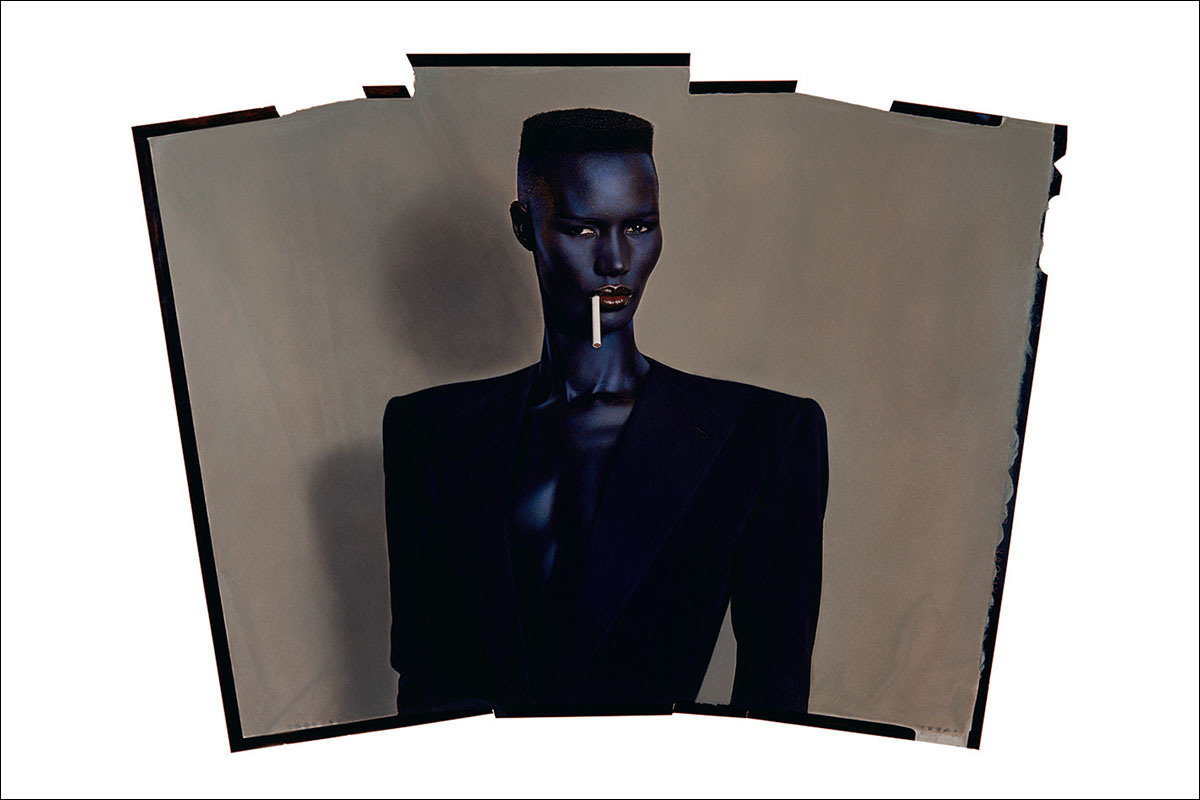
If you scowled more, got some facial piercings, and wore a lot of leather, you could really freak some people out. This is exciting to think about. For now, you wear cozy sweaters and low rise jeans.
Over a decade ago, in college, your poetry professor told you that you reminded her of her former student who is now a renowned poet. “She was a surly girl,” your professor said. Sitting in her small office, across from her at her old wooden desk, you thought, oh right, we’re both black. You understand now that this may not have been what she meant. (But who knows. In fact, the former student has written award-winning volumes on such micro-aggressions.) You wonder if there was perhaps a positive inflection somewhere in this word for a kind of refusal that you took for, what? Indelicacy? Cruelty? Aggression?
Surly. It’s hard to tell the difference, sometimes, between what you put on and what is already yours. You did not want to be imperious or ungrateful. You did not want to be the kind of person who was “withholding” or “judgmental” or “oddly formal,” which people had actually called you to your face. You did not want to scare anyone. Not anymore. You figured that you had as much to learn as anybody else, and that what you had to learn was how to lighten up.
But there are shades of difference between confidence and arrogance, directness and harshness. To describe you, people—and I don’t just mean the people you know but people in the world—will often substitute one for the other, perhaps according to how tall you are or how unsmiling your appear or how dark your skin looks to them. Oh well. You have turned a corner. You want to scare them.
You are at a crosswalk, and start moving. A car swipes past you, honks, and the driver looks at you crazy. You stare back at him with disdain. You realize there was no stop sign and the car had the right of way, but who cares. He saw you. This is your street.
One day, you are witness to a miraculous act of manipulation that nobody else seems to recognize. And you cannot intervene, because the act is ingenious. To point out the trick would be to implicate yourself in its wiles. And it would be narcing. You laugh to yourself, loudly and for a long time. You wish the genius well in their shameless pursuit.
But you don’t need their stratagems; you have found a more efficient way to get exactly what you want. “Don’t talk about it / be about it,” Busta Rhymes barks into your ears. “SHUT UP.” You stalk the streets. Stomp stomp stomp. You don’t give a fuck. Stomp stomp. You don’t say a word. You’re growling at everybody. They feel good, the vibrations in your body.
Your body. So far, it is taking the new proximity of feelings quite well. Now, when something rises up in your chest, you don’t struggle against it, you don’t push it back down. Instead, you let out a howl. Do they hear it? Who cares. The howl is just for you. The withholding is all the fun—nobody else gets to have this private part of you. You used to want to share it so badly. To give away your deepest self to the Other. Therein lied the manipulation. Here—let me just you show you how special I am, how much you could get out of loving me. It didn’t work. It was no fun. And you still lost.
You think about the genius. They will lose, too. You don’t feel too bad. It’s instructive to watch back the tape. It’s a hero’s journey. You fall from the pedestal you built for someone else, anyone else, and down, down, down you go, to the underside of their shoe. You scrape the gum off their sole with your teeth—something to chew on. Finally, you get up. You’re sick of eating shit. You slowly and delicately put on your big black boots.
—
See the bottom of this post for details on how to be part of Mildly Yours.